
Pack 94 News
Adventure Is The Program
September 11, 2026
Adventure Is the Program
How Cub Scouts learn, grow, and build skills one Adventure at a time.
If you’ve looked through your Scout’s handbook, heard a Den Leader talk about “working on an Adventure,” or noticed all those colorful belt loops, you may have wondered exactly what an Adventure is.
The simple answer: Adventures are how Cub Scouts learn.
Cub Scouts learn by doing. Adventures turn lessons into activities where Scouts can build things, explore outside, play games, practice new skills, work together, help others, ask questions, and try things they may have never done before. Whether it happens in a meeting room, at home, or out on the trail, the idea is the same: give Scouts a chance to experience what they’re learning.
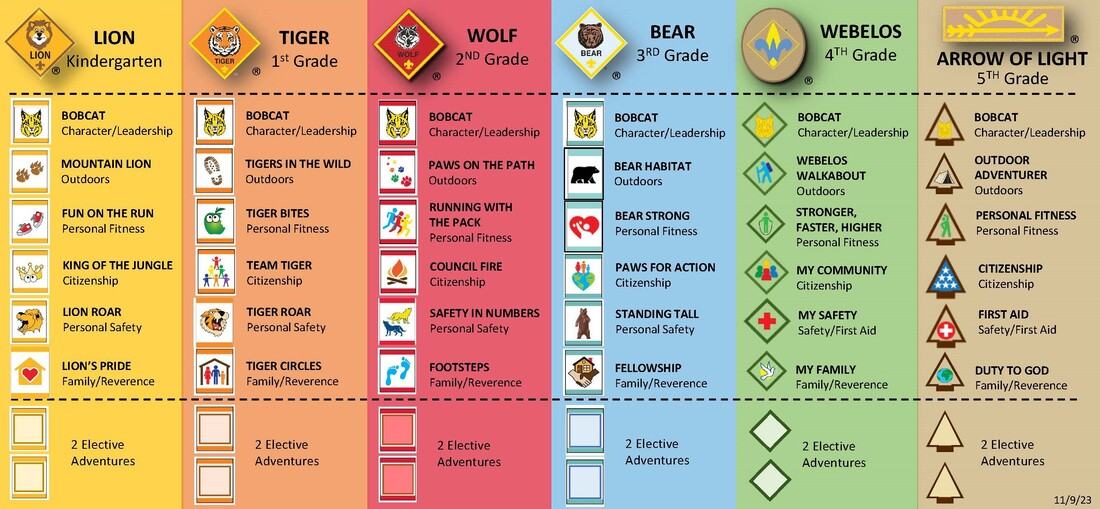
Each rank — from Lion through Arrow of Light — has its own age-appropriate Adventures. The specific activities become more challenging as Scouts grow, but the same core ideas continue year after year.
A Lion might start by learning a simple outdoor safety rule. A few years later, that same Scout may be planning what to bring on a hike. By Arrow of Light, they’re preparing for the greater independence and responsibility they’ll experience in Scouts BSA.
The same progression happens with leadership, fitness, citizenship, safety, family, and outdoor skills.
Each year builds on the one before it.
Those Adventures are organized around six core categories that follow Scouts throughout the Cub Scout program.
The Six Required Adventure Categories
Every Cub Scout rank includes required Adventures in the same six core categories. The activities change by age and become more challenging as Scouts advance, but every Scout works through these same areas on the way to earning their rank.
These Adventures help Scouts practice teamwork, responsibility, communication, decision-making, and the values found in the Scout Oath and Scout Law. As Scouts grow, they take on more responsibility and learn that leadership is about helping others succeed, not just being in charge.

Outdoor Adventures get Scouts hiking, camping, exploring nature, practicing conservation, and learning outdoor skills. The activities become more challenging as Scouts advance, gradually preparing them for greater independence and the outdoor experiences ahead in Scouts BSA.

Personal Fitness Adventures focus on healthy habits, physical activity, nutrition, rest, and taking care of yourself. Scouts learn to set goals, challenge themselves, and recognize their own improvement rather than simply trying to be the fastest or strongest.

These Adventures teach Scouts how to recognize hazards, make safe choices, respond appropriately in emergencies, and know when to ask for help. As they grow, Scouts are introduced to practical skills like first aid, emergency preparedness, and outdoor safety.

Family & Reverence Adventures encourage Scouts to spend meaningful time with family, practice gratitude, and think about the values and beliefs that guide their lives. They also help Scouts understand reverence and learn to respect the beliefs and traditions of others.

Citizenship Adventures help Scouts understand their role in their family, community, and country. Through service and age-appropriate activities, Scouts learn that being a good citizen means helping others, showing respect, and taking responsibility for making their community better.

Elective Adventures
Required Adventures create the foundation of each Cub Scout rank, but Scouts also get to explore interests of their own through elective Adventures.
To earn their rank, Scouts must complete at least two elective Adventures in addition to the required Adventures.
Electives give Scouts the chance to try something new or dig deeper into something they already enjoy. Depending on the rank, those opportunities can include activities related to fishing, biking, science, technology, sports, conservation, building, cooking, and many other interests.
Some electives may be completed with the Den, while others can be great activities for Scouts and families to work on together outside regular meetings.
The belt loops and rank badges are important milestones, but they represent something bigger.
Every Adventure is another opportunity to learn something new, solve a problem, help somebody, build confidence, spend time together, and discover something your Scout didn’t know they could do.
That’s the real adventure.
Beyond the Den Meeting: Use Your Handbook!
Cub Scouting doesn’t have to stop when the Den meeting ends.
Your Scout’s handbook is more than something we use during meetings — it’s a menu of things your Scout can explore throughout the year. In addition to the Adventures their Den works on together, Scouts have elective Adventures covering all kinds of interests and activities.
Take a few minutes to flip through the handbook with your Scout. Let them look at the elective Adventures and find something that catches their attention. You might discover an Adventure that lines up perfectly with something your family was already planning to do.
Bring the handbook to Den meetings, but don’t be afraid to open it at home, too.
If your Scout completes an elective Adventure or requirements outside a Den meeting, let your Den Leader know so they can make sure your Scout gets credit for the work.

What If We Miss a Meeting?
Life happens. Sports happen. School events happen. Families travel. Scouts get sick.
Missing a Den meeting doesn’t mean your Scout has fallen behind.
If your Scout misses a meeting where the Den worked on an Adventure, check with your Den Leader. They can tell you what the Den completed and whether the missed requirements can be made up at home or through another activity.
Parents can also use the Scouting app to keep an eye on their Scout’s advancement progress and see which Adventures and requirements have been completed. It’s a helpful way to follow along during the year and identify anything your Scout may still need to finish.
Many Cub Scout requirements are designed to include family involvement, so catching up may be as simple as doing an activity together and letting your Den Leader know when it’s complete.
Some activities may be easier to make up than others, and certain requirements are best completed with the Den. Your Den Leader can help you figure out the best approach.
The goal isn’t perfect attendance.
The goal is to keep your Scout learning, participating, and moving forward on the adventure.
Upcoming Activities
- Sep 14 Den Meeting 6:30 PM - 7:30 PM Santa Fe Presbyterian Church
- Fri Sep 18 - Sun Sep 20 Webelos Woods (Webelos & AOLs) John Nichols Scout Ranch - OKC
- Sep 21 Pack Meeting #2 - Fishing Night! 6:30 PM - 8:00 PM Fallbrook Community Pond